FIRST STEPS FOSTERING COURSE PREVIEW
You’re viewing the first module in this course section. This course section has 10 parts. Register for free to read it within the full First Steps course, save your progress, use quizzes and continue through the remaining modules.
Meeting Identity Needs of Children in Foster Care
Children in foster care come from many ethnic, cultural, religious and linguistic backgrounds. Wherever possible, foster carers should understand and support these important parts of a child’s identity. An exact match is not always available, but carers can help children remain connected to their heritage, community, faith, language and personal history.
A foster family from a different background can still provide safe, stable and nurturing care by being curious, respectful and willing to learn. This includes listening to the child, working positively with their family and professional network, challenging discrimination, and making everyday space for the child to feel accepted, valued and secure.
Modules in this course section
- FOSTERING: 1. What foster carers need to consider? — 7 minutes
- FOSTERING: 2. Supporting a child’s identity, heritage and belonging in fostering — 9 minutes
- FOSTERING: 3. Case Study: Ava and Kai — 9 minutes
- FOSTERING: 4. Sibling Groups in foster care — 9 minutes
- FOSTERING: 5. Case Study: Zara and Emily — 8 minutes
- FOSTERING: 6. Staying in touch for children in fostering arrangements — 10 minutes
- FOSTERING: 7. Case Study Mason, aged 11 — 8 minutes
- FOSTERING: 8. Life story work in fostering — 4 minutes
- FOSTERING: 9. Case Study: Jayden, aged 14 — 5 minutes
- Next Steps... — 1 minute
Preview this first module, then register free to continue through the full section.
FOSTERING: 1. What foster carers need to consider?
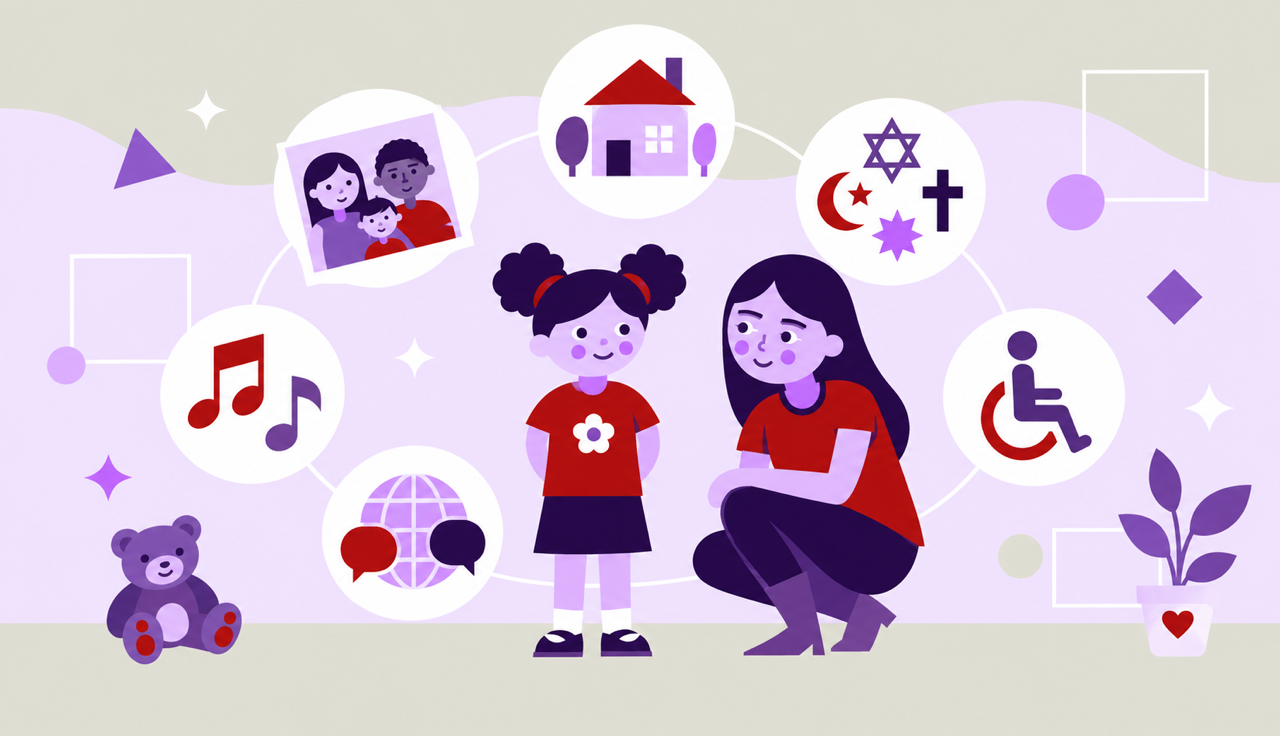
In fostering, children may need a home urgently and may not always be able to live with carers who share the same ethnic, cultural, religious or linguistic background. This should not create unnecessary delay, but it does mean foster carers must be ready to actively support the child’s identity from the beginning. A good fostering match considers the whole child, including their heritage, family connections, disability, neurodiversity, communication needs, faith, language, experiences of discrimination and sense of belonging. Where there is not an exact match, foster carers have an important role in helping the child stay connected to who they are, while providing safe, stable and nurturing care.
Identity Heritage & Culture
The Expressions of Self study highlights that identity is personal, changing and shaped by many parts of a child’s life. For children in foster care, this can include ethnicity, culture, faith, language, disability, neurodiversity, family relationships and experiences of discrimination or belonging. In this session, we will use young people’s experiences to help foster carers think about how to notice, respect and support each child’s identity in everyday care.
Many children in care live with foster carers, and their needs, identities and backgrounds are varied. In England, there were 81,770 looked-after children on 31 March 2025, and around two thirds of children in care were living in foster care. This means foster carers play a central role in helping children feel safe, settled and understood while they remain connected to their family history, culture, faith, language and wider identity (Department for Education, 2025).
The fostering population is also diverse. Coram BAAF’s summary of national data for England reported that, at 31 March 2024, 71% of looked-after children were White, 11% had a Mixed ethnic background, 5% were Asian, 7% were Black and 5% were from another ethnic group. These figures remind us that carers need to be prepared to support children whose ethnicity, culture, religion or language may be different from their own, without expecting the child to fit into the carer’s background.
Why is a child's racial and cultural heritage important?
Children in foster care may have experienced separation, loss, changes of home, school or relationships, and gaps in what they know about their own story. Research and practice guidance on life story work highlights that children in care need help to make sense of their past, understand who they are, and connect this with their present and future. Supporting a child’s racial, cultural, religious and linguistic heritage is therefore not an “extra”; it is part of helping them build identity, belonging, confidence and emotional security (Research in Practice, 2022; CoramBAAF, 2016).
Foster carers can support this through everyday conversations, life story work, links with family and community, and by noticing how racism, discrimination or feeling “different” may affect the child. The aim is to help the child feel proud of all parts of who they are, while knowing they are safe, valued and listened to in the foster home.
Answer the following questions about identity, heritage, culture and belonging in fostering.